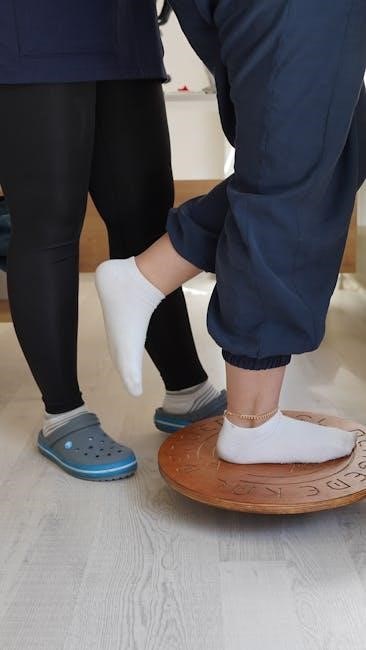
Total Knee Replacement Exercises PDF: A Comprehensive Plan
Navigating post-operative recovery demands accessible resources; numerous PDFs detail rehabilitation protocols, like those found on Yumpu․com, offering structured exercise guidance․
These documents, often from orthopedic sources, provide phased programs—from immediate post-op movements to advanced strengthening—supporting optimal knee function restoration․
Digital accessibility ensures patients can readily review and implement prescribed exercises, promoting adherence and accelerating healing, as evidenced by available online examples․
Following total knee replacement surgery, a structured rehabilitation program is paramount for regaining strength, flexibility, and function․ Accessible resources, such as Total Knee Replacement Exercises PDFs, play a crucial role in guiding patients through this process․ These documents, often sourced from orthopedic specialists and hospitals (like those available on platforms like Yumpu․com), provide a phased approach to recovery․
The initial focus is on managing pain and swelling, initiating gentle range-of-motion exercises, and restoring basic mobility․ As healing progresses, the program advances to include strengthening exercises, balance training, and functional activities․ PDF guides offer detailed instructions and illustrations, ensuring patients understand proper form and technique․
Consistent adherence to the prescribed exercise regimen is vital for achieving optimal outcomes․ These PDFs empower patients to actively participate in their recovery, promoting independence and a return to desired activities․ Early intervention and progressive loading are key principles underpinning successful post-operative rehabilitation․
Phase 1: Immediate Post-Operative Exercises (Days 1-7)
The first week post-total knee replacement focuses on controlling pain and initiating gentle movement․ Total Knee Replacement Exercises PDFs emphasize exercises like ankle pumps, performed frequently to stimulate circulation and prevent blood clots․ Quadriceps sets—contracting the thigh muscles—are crucial for activating key muscles without bending the knee․
Heel slides gently increase knee flexion, while short arc quads strengthen the quadriceps in a limited range of motion․ Straight leg raises improve quadriceps strength and hip flexor control․ These exercises, detailed in downloadable PDFs, are performed frequently throughout the day․
The goal is to regain early range of motion and prevent stiffness․ Pain management is essential, and exercises should be performed within a comfortable range․ Following the PDF’s guidance ensures proper technique and minimizes the risk of complications during this initial recovery phase․
Ankle Pumps and Quadriceps Sets
Total Knee Replacement Exercise PDFs consistently highlight ankle pumps and quadriceps sets as foundational exercises․ Ankle pumps involve repeatedly pointing and flexing the feet, enhancing circulation in the lower legs and reducing swelling—a common post-operative concern․ These are performed frequently throughout the day, even while resting in bed․
Quadriceps sets focus on strengthening the thigh muscles․ Patients tighten their quadriceps, pressing the back of the knee into the bed, holding for several seconds, and then relaxing․ This isometric exercise activates the muscles without requiring knee movement, crucial in the early stages of recovery․
PDF guides emphasize proper form and consistent repetition․ These simple exercises, when diligently performed, lay the groundwork for improved knee function and faster rehabilitation, minimizing stiffness and promoting healing․
Heel Slides
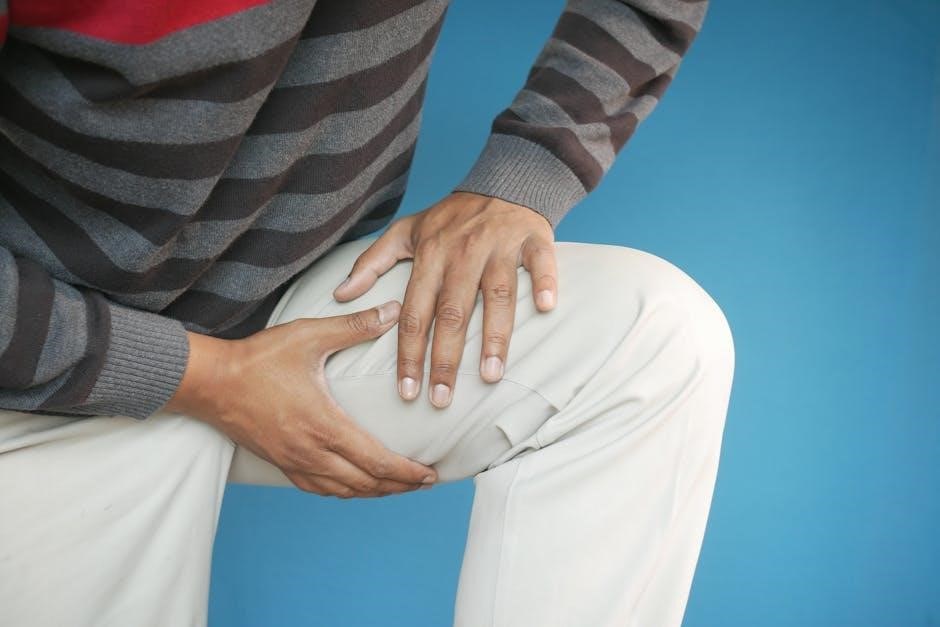
Total Knee Replacement Exercise PDFs universally include heel slides as a key early-stage exercise․ This gentle movement involves lying on your back and slowly sliding your heel towards your buttocks, bending the knee as far as comfortable․ The exercise is then reversed, straightening the leg․
Heel slides improve knee flexion and extension range of motion, combating post-operative stiffness․ PDFs often recommend performing multiple repetitions, gradually increasing the range of motion as tolerated․ Maintaining a controlled pace and avoiding pain are crucial․
These exercises are typically initiated within the first few days post-surgery, under the guidance of a physical therapist․ Consistent performance of heel slides, as detailed in rehabilitation PDFs, is vital for restoring normal knee movement and function․
Short Arc Quads
Total Knee Replacement exercise PDFs consistently feature short arc quads as a foundational strengthening exercise․ This involves placing a rolled towel or bolster under the knee, then contracting the quadriceps muscle to straighten the lower leg, lifting the foot off the surface․
The “short arc” refers to the limited range of motion – focusing on the final 10-20 degrees of knee extension․ PDFs emphasize maintaining a tight quadriceps contraction for several seconds, followed by a slow, controlled lowering of the leg․
This exercise strengthens the quadriceps without placing excessive stress on the knee joint, crucial in the early stages of recovery․ Regular performance, as outlined in rehabilitation protocols, helps restore knee extension and improve overall leg strength․

Straight Leg Raises
Total Knee Replacement exercise PDFs universally include straight leg raises as a key component of early rehabilitation․ These are performed while lying on your back, keeping the operated leg straight and tightening the quadriceps muscle․ Slowly lift the leg approximately 6-12 inches off the ground, maintaining the knee’s locked position․

PDFs stress the importance of avoiding any lag in the knee and holding the raised position for several seconds before gently lowering․ This exercise primarily targets the quadriceps, strengthening the muscles responsible for knee extension․
It also helps improve muscle control and reduces swelling․ Consistent execution, as detailed in rehabilitation guides, is vital for regaining strength and function post-surgery, contributing to a successful recovery trajectory․
Phase 2: Early Rehabilitation (Weeks 1-3)
Total Knee Replacement exercise PDFs outline Phase 2 (Weeks 1-3) as a period of increasing mobility and strength․ Exercises build upon the foundation established in Phase 1, gradually challenging the knee joint․ Key exercises include standing knee bends, initiated with minimal flexion, and wall slides, promoting controlled range of motion․
PDFs emphasize the importance of pain management during this phase, advising patients to modify exercises as needed․ Calf stretches and hamstring sets are also incorporated to address muscle imbalances and improve flexibility․
The goal is to achieve approximately 90 degrees of knee flexion and improve gait mechanics․ Consistent adherence to the PDF protocol, coupled with regular monitoring by a physical therapist, is crucial for optimal progress․
Standing Knee Bends
Total Knee Replacement exercise PDFs detail Standing Knee Bends as a cornerstone of early rehabilitation, typically introduced during Weeks 1-3․ These are performed by standing with support – a counter or chair – and gently bending the knee, maintaining good posture․
PDFs emphasize starting with small, pain-free ranges of motion, gradually increasing the bend as strength and flexibility improve․ Focus is on controlled movement, avoiding any twisting or jerking․ Repetitions are usually prescribed in sets, with rest periods in between․
The exercise aims to restore knee flexion and strengthen the quadriceps and hamstring muscles․ Proper form is paramount; PDFs often include illustrations demonstrating correct technique․ Patients are advised to stop if they experience significant pain․
Wall Slides
Total Knee Replacement exercise PDFs commonly feature Wall Slides as a key component of early rehabilitation, generally initiated during Weeks 1-3․ This exercise involves standing with your back against a wall, feet shoulder-width apart, and slowly sliding down into a squat position․

PDFs stress maintaining a straight back and keeping your knees aligned with your ankles․ The depth of the slide should be limited to a comfortable range, avoiding any pain․ Controlled movement is crucial, emphasizing a slow and deliberate descent and ascent․
Wall Slides strengthen the quadriceps, hamstrings, and gluteal muscles, improving knee stability and range of motion․ Many PDFs provide visual guides demonstrating proper form․ Patients should cease if they feel sharp pain or instability․
Calf Stretches
Total Knee Replacement exercise PDFs consistently include Calf Stretches within the early rehabilitation phase (Weeks 1-3), aiming to restore ankle dorsiflexion and prevent stiffness․ These stretches are typically performed facing a wall, with one leg extended back and heel firmly planted on the ground․
PDFs emphasize leaning forward, maintaining a straight back, until a gentle stretch is felt in the calf muscle․ Holding the stretch for 20-30 seconds, repeating several times, is standard guidance․ Variations include bending the back knee to target the soleus muscle․
Proper form, as illustrated in many PDF guides, is vital to avoid overstretching․ Calf stretches improve flexibility, reduce tightness, and contribute to a more natural gait pattern post-surgery․ Discontinue if pain arises․
Hamstring Sets
Total Knee Replacement exercise PDFs routinely feature Hamstring Sets as a foundational exercise in the early rehabilitation phase (Weeks 1-3), focusing on activating and strengthening the hamstring muscles․ These isometric exercises are performed while lying on your back, with your heel pressed into the bed or floor․
PDF guides instruct patients to tighten the hamstring muscle, attempting to pull the heel closer to the buttocks, without actually moving the leg․ Maintaining this contraction for 5-10 seconds, followed by relaxation, is the typical protocol․ Repetitions are usually performed 10-15 times, several times a day․
Hamstring sets help regain muscle control, improve knee stability, and prepare for more dynamic exercises․ PDFs often highlight the importance of keeping the quadriceps relaxed during the set․ Consistent performance aids in restoring normal knee function․
Phase 3: Intermediate Rehabilitation (Weeks 4-6)
Total Knee Replacement exercise PDFs detail Phase 3 (Weeks 4-6) as a period of increasing strength and range of motion․ Exercises build upon the foundation established in earlier phases, progressing towards more functional movements․ Step-ups onto a low platform are commonly included, enhancing leg strength and balance․
Mini squats, performed with a limited range of motion, further challenge the quadriceps and hamstrings․ Stationary cycling, with adjustable resistance, improves cardiovascular fitness and knee flexibility․ PDFs emphasize proper form to prevent injury and maximize effectiveness;
This phase focuses on regaining confidence and independence․ Protocols often suggest increasing repetitions and sets as tolerated․ Consistent adherence to the PDF’s guidelines is crucial for continued progress and a successful recovery․

Step-Ups
Total Knee Replacement exercise PDFs consistently feature step-ups as a key component of intermediate rehabilitation․ This exercise strengthens the quadriceps, hamstrings, and gluteal muscles, crucial for functional activities like stair climbing․ PDFs typically recommend starting with a low step height (4-6 inches) and gradually increasing it as strength improves․
Proper form is paramount: lead with the operated leg, maintaining a controlled motion, and avoiding twisting․ Focus on fully extending the knee on the step before bringing the other leg up․ PDFs often include modifications, such as using a handrail for support or performing partial step-ups․
The number of repetitions and sets will vary based on individual progress, as outlined in the PDF protocol․ Step-ups contribute significantly to regaining independence and returning to daily activities․
Mini Squats
Total Knee Replacement exercise PDFs frequently incorporate mini squats into the intermediate rehabilitation phase, emphasizing controlled knee flexion and strengthening․ Unlike full squats, mini squats involve a limited range of motion – typically bending the knee to approximately 45-60 degrees․ This reduced range minimizes stress on the joint while still effectively targeting the quadriceps, hamstrings, and gluteal muscles․
PDFs often instruct patients to keep their back straight, chest up, and weight shifted slightly back, similar to sitting in a chair․ Maintaining proper alignment is crucial to avoid compensatory movements․ Starting with a small range of motion and gradually increasing it as strength improves is a common recommendation․
The number of repetitions and sets are detailed within the PDF protocol, tailored to individual progress and tolerance․ Mini squats are vital for building strength and confidence in knee function․
Stationary Cycling
Total Knee Replacement exercise PDFs consistently recommend stationary cycling as a cornerstone of intermediate rehabilitation, promoting cardiovascular fitness and knee range of motion․ PDF protocols emphasize starting with minimal resistance and a comfortable seat height, ensuring the knee doesn’t overextend or lock․ Gradual increases in resistance and duration are advised as strength and endurance improve․
Cycling encourages smooth, controlled knee flexion and extension, reducing stiffness and improving joint lubrication․ Many PDFs suggest beginning with short sessions – 5 to 10 minutes – and progressively increasing the time to 20-30 minutes․ Maintaining a consistent cadence (pedal speed) is also highlighted․
This low-impact exercise is beneficial for strengthening quadriceps and hamstrings, contributing to overall knee stability and function․ Regular cycling aids in a faster, more complete recovery․
Phase 4: Advanced Rehabilitation (Weeks 7-12+)
Total Knee Replacement exercise PDFs detail Phase 4 as focusing on restoring full functionality and preparing for return to activity․ This stage incorporates challenging exercises like lunges, emphasizing controlled movements and proper form to build strength and stability․ Balance exercises are crucial, often involving single-leg stands and perturbations, improving proprioception and preventing falls․
PDFs highlight the integration of strengthening with resistance bands, targeting specific muscle groups around the knee․ Proprioceptive training, utilizing wobble boards or balance cushions, further refines joint awareness and control․ Progressive overload is key – gradually increasing intensity and complexity․
The goal is to achieve near-normal gait and function, enabling participation in desired activities․ Continued adherence to the PDF protocol and communication with a physical therapist are vital for optimal outcomes․
Lunges
Total Knee Replacement exercise PDFs introduce lunges during the advanced rehabilitation phase (Weeks 7-12+), emphasizing controlled, progressive loading․ Initially, these are often modified – shorter steps and support from a chair – to minimize stress on the joint․ PDFs detail proper form: maintaining an upright torso, keeping the front knee aligned over the ankle, and avoiding excessive knee valgus (inward collapse)․
Lunges strengthen quadriceps, hamstrings, and gluteal muscles, crucial for stability and function․ As strength improves, the step length can gradually increase, and assistance can be reduced․ Variations, like reverse lunges or lateral lunges, may be included to target different muscle groups․
It’s vital to listen to your body and stop if pain occurs․ PDFs often include cautions regarding appropriate progression and potential modifications based on individual recovery․
Balance Exercises
Total Knee Replacement exercise PDFs prioritize balance training in the advanced rehabilitation stage (Weeks 7-12+), recognizing its importance for functional independence․ These exercises challenge the neuromuscular system, improving proprioception – the body’s awareness of its position in space․ PDFs commonly suggest starting with static balance activities, like standing on one leg for increasing durations, initially near a stable surface․
Progressive challenges are then introduced: tandem stance (heel-to-toe), weight shifting, and eventually, dynamic activities like walking heel-to-toe․ Unstable surfaces, such as foam pads or wobble boards, may be incorporated under the guidance of a physical therapist․
Balance exercises enhance stability, reduce the risk of falls, and improve confidence in daily activities․ PDFs emphasize safety, recommending a spotter or nearby support during initial attempts․
Strengthening with Resistance Bands
Total Knee Replacement exercise PDFs frequently incorporate resistance bands for strengthening, offering a versatile and portable method to build muscle strength․ These bands provide progressive resistance, allowing patients to gradually increase the challenge as their strength improves․ PDFs typically detail exercises targeting key muscle groups: quadriceps, hamstrings, glutes, and hip abductors․
Common exercises include: band walks (lateral and forward), leg extensions, hamstring curls, and hip abduction/adduction․ PDFs emphasize proper form to maximize effectiveness and prevent injury․ Resistance level selection is crucial; start with lighter bands and progress as tolerated․

Resistance band training enhances muscle strength, improves joint stability, and supports functional activities․ PDFs often provide illustrations demonstrating correct technique and band placement․
Proprioceptive Training
Total Knee Replacement exercise PDFs highlight proprioceptive training, crucial for restoring balance and coordination post-surgery․ Proprioception—the body’s awareness of its position in space—is often impaired after a knee replacement․ PDFs detail exercises designed to retrain this sense, improving stability and reducing fall risk․
Exercises commonly include: single-leg stance (with and without support), weight shifts, and balance board/foam pad activities․ PDFs emphasize performing these exercises on unstable surfaces to challenge the joint and enhance proprioceptive feedback․ Visual cues and verbal instructions are often provided․
Proprioceptive training improves neuromuscular control, allowing for smoother, more coordinated movements․ PDFs often recommend incorporating these exercises into a daily routine, gradually increasing the difficulty as balance improves․
Return to Activity and Long-Term Maintenance
Total Knee Replacement exercise PDFs emphasize a gradual return to activity, tailored to individual progress․ PDFs outline a phased approach, starting with low-impact activities like walking and swimming, and progressing to more demanding tasks․ Long-term maintenance is key; PDFs stress the importance of continued exercise to preserve knee function and prevent complications․
PDFs often include guidelines for modifying activities to minimize stress on the joint․ Maintaining a healthy weight and avoiding high-impact exercises are frequently recommended․ Regular strengthening and flexibility exercises are crucial for long-term success․
Many PDFs advocate for a lifelong commitment to knee health, including periodic check-ups with a physical therapist․ Adhering to the recommended exercise program ensures optimal joint health and quality of life․
Importance of Following a PDF Protocol
Utilizing a Total Knee Replacement exercise PDF protocol is paramount for optimal recovery․ These documents, often sourced from orthopedic professionals (like those available on platforms such as Yumpu․com), provide a structured, progressive plan․ Deviation can hinder healing and potentially lead to complications․
A PDF ensures consistency and clarity, outlining specific exercises, repetitions, and timelines․ Following the protocol minimizes the risk of overexertion or improper form, crucial for preventing injury․ PDFs often detail modifications for individual needs and progress levels․
Adherence to a prescribed PDF demonstrates commitment to rehabilitation, maximizing the chances of a successful outcome and a return to desired activities․ It empowers patients with knowledge and control over their recovery journey․
Potential Complications and When to Seek Help
While following a Total Knee Replacement exercise PDF is vital, awareness of potential complications is crucial․ Signs of infection—increased pain, redness, swelling, or fever—require immediate medical attention․ Deep vein thrombosis (DVT), characterized by leg pain or swelling, is another serious concern․
Persistent or worsening pain despite following the protocol warrants a call to your surgeon․ Inability to perform exercises as instructed, or new limitations in range of motion, should also be reported․ Any numbness or tingling in the leg or foot needs prompt evaluation․
Don’t hesitate to seek help if you experience unusual symptoms․ Early intervention can prevent minor issues from escalating into significant problems, ensuring a smoother recovery process․
Resources for Finding Total Knee Replacement Exercise PDFs
Numerous online platforms host Total Knee Replacement exercise PDFs․ Yumpu;com, for instance, provides access to various post-operative protocols from different orthopedic institutions․ Hospital websites often offer downloadable PDFs tailored to their specific surgical techniques․
Searching for “Total Knee Replacement Rehabilitation Protocol PDF” yields a wealth of results․ Websites of orthopedic surgeons and physical therapy clinics frequently feature exercise guides․ Professional organizations, like the American Academy of Orthopaedic Surgeons (AAOS), may also provide resources․

Always verify the source’s credibility before using a PDF․ Ensure the exercises align with your surgeon’s recommendations․ Discuss any concerns with your physical therapist to personalize the program effectively․

Customizing Exercises Based on Individual Progress
Total Knee Replacement rehabilitation isn’t a one-size-fits-all process․ PDF exercise guides offer a framework, but personalization is crucial․ Regular communication with your physical therapist is paramount to adjust the program based on your unique recovery trajectory․
Factors like pain levels, swelling, and range of motion dictate exercise modifications․ Don’t hesitate to report any discomfort during exercises; adjustments can prevent setbacks․ Progressing too quickly can hinder healing, while insufficient challenge may delay functional gains․
Your therapist will assess your strength and stability, tailoring exercises to address specific weaknesses․ Listen to your body and prioritize proper form over repetitions, ensuring safe and effective rehabilitation․